



AWD vs 4WD: What’s The Difference & Which Chevy Is Best For You?
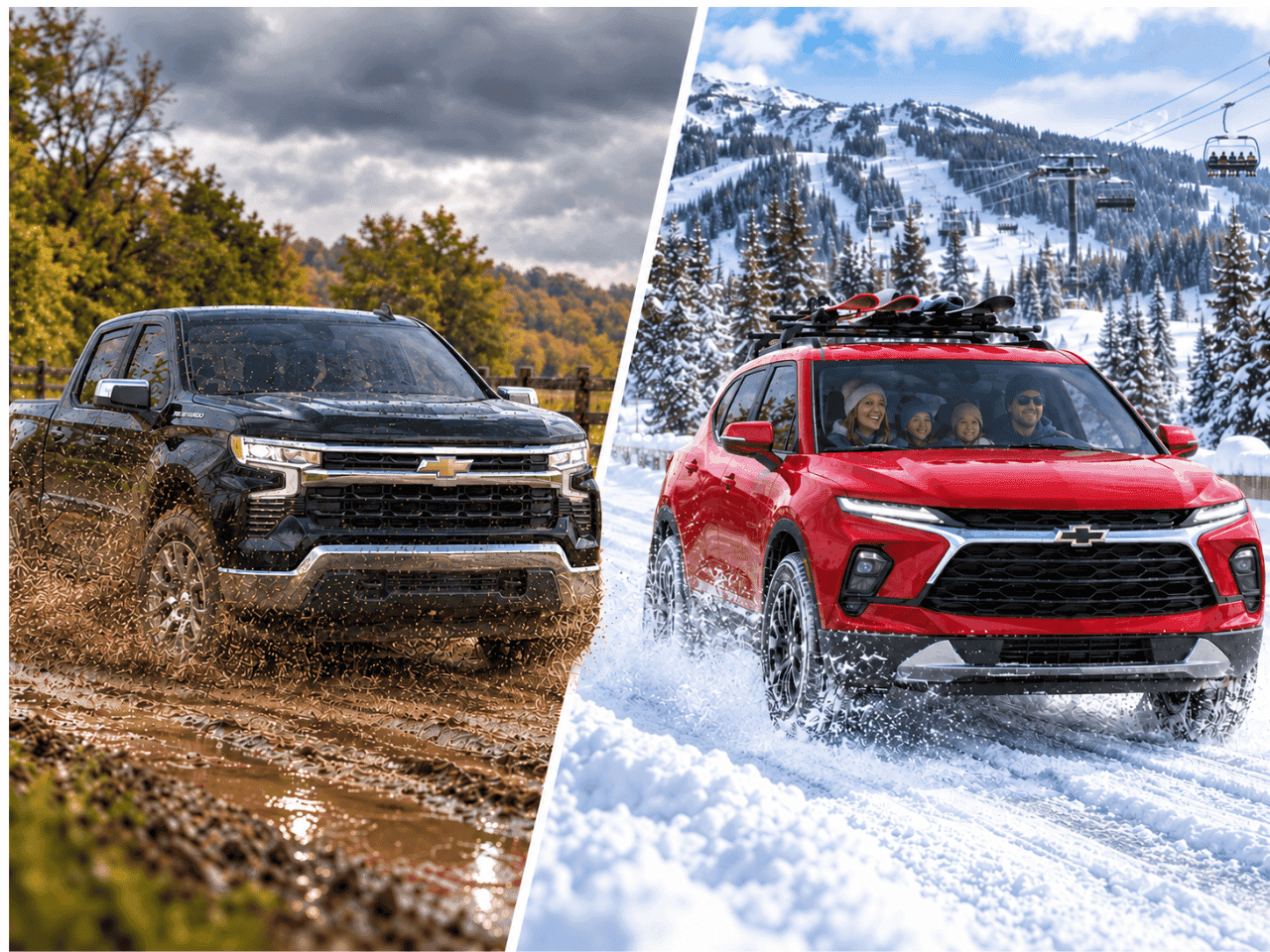 If you’re shopping for a new Chevy, particularly here in Connecticut, there’s a good chance you’ve encountered two familiar abbreviations: AWD and 4WD.
Both systems can provide additional traction when road conditions get challenging, but all-wheel drive and four-wheel drive aren’t exactly the same. Understanding the differences can help you choose a Chevy that’s better suited to your commute, lifestyle, and driving habits.
Here’s what you should know about AWD vs. 4WD before choosing your next Chevrolet.
What Is AWD?
AWD stands for all-wheel drive. An AWD system can send power to all four wheels to help improve traction and stability when conditions require it.
One of AWD’s biggest advantages is convenience. The system is designed to help manage traction without requiring the driver to constantly think about when four-wheel traction is necessary.
That makes AWD particularly appealing for everyday driving where conditions can change quickly.
AWD can be a great choice for:
- Daily commuting
- Rain and wet roads
- Snow-covered roads
- Changing New England weather
- Drivers who want additional traction without much extra input
For many Connecticut drivers, an AWD Chevy SUV provides an excellent combination of everyday comfort and all-weather confidence.
What Is 4WD?
4WD stands for four-wheel drive. While the exact operation depends on the vehicle, four-wheel-drive systems are generally designed with more demanding driving situations in mind.
That’s one reason you’ll commonly find 4WD offered on Chevy trucks and larger SUVs.
Four-wheel drive can be particularly useful when you’re dealing with deep snow, mud, rough terrain, unpaved roads, job sites, or other situations where maximum traction and capability are priorities.
4WD may be better suited for:
- Deep snow
- Off-road driving
- Mud and rough terrain
- Work sites
- Towing and hauling
- Drivers who regularly encounter challenging conditions
If capability is high on your priority list, a 4WD Chevy truck or SUV may be a better fit.
AWD vs. 4WD: What’s the Main Difference?
The simplest way to think about the difference is everyday traction vs. more demanding capability.
AWD systems are generally designed to provide additional traction during normal everyday driving. They can automatically adapt as traction conditions change, making AWD a convenient option for drivers who regularly encounter rain, snow, and slippery roads.
4WD systems are generally geared toward more difficult situations where additional traction and capability are needed.
Neither system is inherently “better.” The better choice depends on where you drive and what you expect your vehicle to do.
Is AWD or 4WD Better in Snow?
This is an especially important question for drivers in Connecticut.
For typical winter driving on paved roads, AWD can be an excellent choice. The system can provide additional traction when accelerating on snowy or slippery surfaces without requiring much involvement from the driver.
If you regularly encounter deeper snow, poorly maintained roads, steep terrain, or more extreme winter conditions, 4WD may provide additional capability.
It’s also important to remember that neither AWD nor 4WD makes a vehicle invincible in winter weather. Your tires play a major role in traction, braking, and handling. Regardless of the drivetrain you choose, good tires and safe driving habits remain essential.
Is AWD Better for Everyday Driving?
For many drivers, yes.
If most of your driving involves commuting, highways, errands, school drop-offs, and family trips, AWD can provide the extra traction you’re looking for while requiring very little additional thought.
That’s why AWD is so popular on SUVs and crossovers.
Connecticut weather can also change quickly. You may encounter dry pavement, rain, slush, and snow during the same week. Having an AWD system available to respond to changing traction conditions can be reassuring.
When Does 4WD Make More Sense?
Four-wheel drive becomes especially attractive when your vehicle needs to do more than everyday commuting.
If you’re buying a Chevy truck for work, frequently towing, driving on unpaved roads, heading off-road, or regularly encountering deep snow, 4WD may be worth considering.
It’s particularly relevant when shopping for vehicles such as the Chevrolet Silverado, Tahoe, Suburban, or Colorado, where capability can be an important part of the buying decision.
Which Chevy Models Offer AWD?
Chevrolet offers AWD on a variety of SUVs and crossovers, depending on model, trim, and configuration.
AWD availability can make Chevy SUVs attractive for drivers who want additional all-weather capability without necessarily needing a traditional four-wheel-drive system.
If you’re primarily looking for a family vehicle, commuter, or everyday SUV that’s ready for Connecticut’s changing seasons, an AWD Chevy may be the ideal fit.
Which Chevy Models Offer 4WD?
Four-wheel drive is commonly associated with Chevy’s trucks and larger, more capability-focused SUVs.
Depending on the model and configuration, you’ll find 4WD options across vehicles such as the Chevrolet Silverado, Colorado, Tahoe, and Suburban.
These vehicles are worth considering if towing, hauling, off-road capability, or more challenging terrain are part of your routine.
Compare AWD and 4WD Chevy Vehicles at Richard Chevrolet
Sometimes the easiest way to choose between AWD and 4WD is to get behind the wheel.
At Richard Chevrolet in Cheshire, CT, you can compare Chevrolet cars, trucks, and SUVs to find the combination of traction, capability, comfort, and features that works for you.
Whether you’re looking for an AWD Chevy SUV for your daily commute or a 4WD Chevy truck that’s ready for tougher jobs and New England winters, our team can help you explore your options and find the right Chevrolet.
0 comment(s) so far on AWD vs 4WD: What’s The Difference & Which Chevy Is Best For You?